



The Present and Future of the
Japanese and European Cybersecurity Markets
日本語 | English
Last month (2025.11), we had the chance to visit AXENTA in Brno, Czech Republic, and exchange information about security trends in Japan and Central Europe. Here we would like to share some of the details of the event.

As a brief aside, if you ask an AI that generates topics about Brno’s cityscape, it might describe it like this:
Walking along the cobblestone streets, you’ll see students sitting at café terraces with laptops open, while Špilberk Castle overlooks the city from a hilltop. At the castle’s base lies Technology Park, housing a range of advanced research facilities. It’s a city where history and IT coexist harmoniously.
Brno is truly picturesque. However, we visited in November and encountered typical Central European weather. The sky was cloudy every day, and we never saw the sun during our stay. Even Špilberk Castle was enveloped in thick fog, and when we climbed the hill, all we could see below was a sea of clouds. This was a unique experience in itself, and we were fortunate not to be rained on, which we attribute to our usual good fortune.
Turning to our main topic, our visit to AXENTA — a company specializing in security monitoring, especially Network Detection and Response (NDR) using Flowmon ADS — was very insightful. Their distinctive analysis techniques and practical incident response are highly regarded across Europe. Our company has been a domestic distributor of Flowmon for many years, and partnering with Czech firms is a key business focus. During the visit, we gained valuable insights into the differences in Flowmon ADS usage and the maturity of SOC service operations, which will help us consider the future of the Japanese market.
Current situation and challenges in the Japanese market, and trends in the Czech market
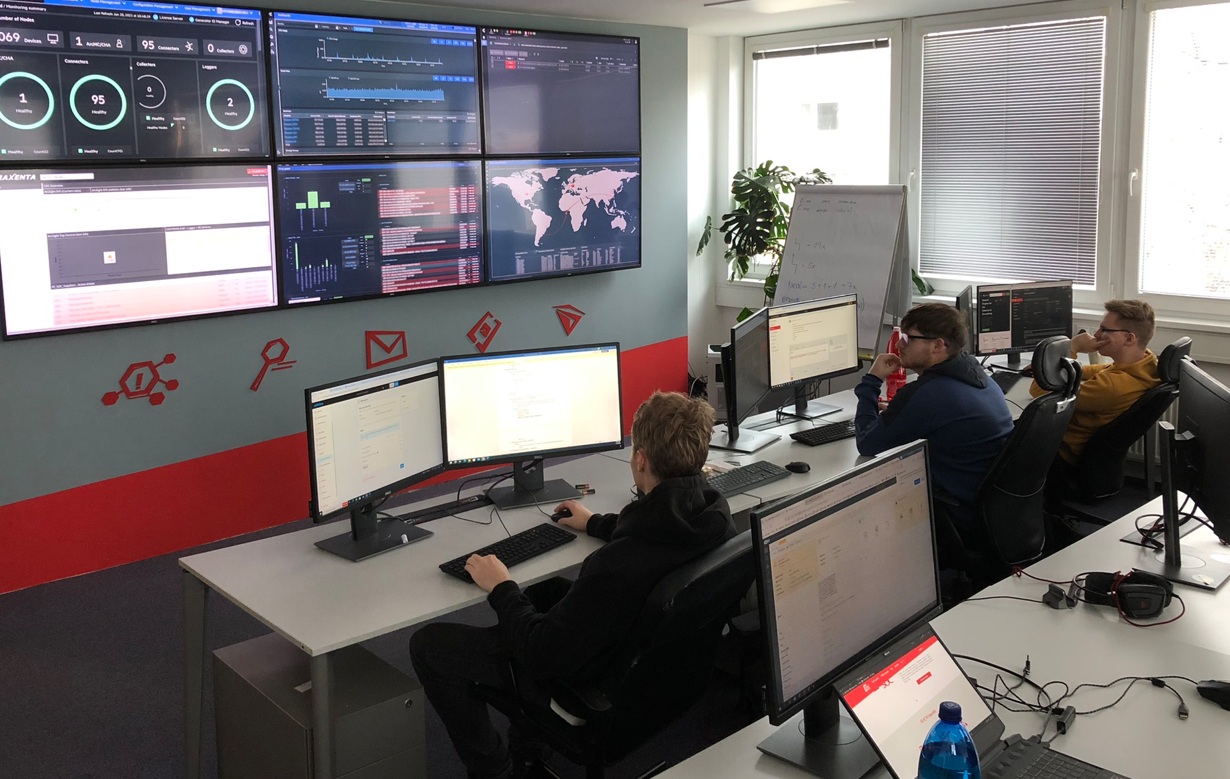
While demand for network visualization solutions has grown in Japan recently, the adoption rate of Flowmon’s Anomaly Detection System (ADS) security feature has remained steady. This is due to challenges in demonstrating the ROI (return on investment) of SOC services and the fragmentation of security investment priorities amid rising interest in new architectures like cloud migration, SASE, and ZTNA. Although the Ministry of Internal Affairs and Communications is working to set rules on log management, such as recommending communication history be stored for three to six months, company responses vary.
In contrast, the Czech Republic has implemented a new cybersecurity law incorporating the EU’s NIS2 Directive into national law, requiring companies to adopt measures like network monitoring, log storage, and incident reporting. Consequently, many companies are establishing continuous monitoring systems, with rapid adoption of Flowmon ADS and upgrades to existing setups. The Czech market, driven by legal regulations, is developing an environment distinct from Japan’s.
These trends highlight how differences in regulatory enforcement, ROI understanding, and security culture maturity create clear distinctions between the Japanese and European markets. However, these differences do not imply one is superior. When Japanese companies address their challenges or make investment decisions, efforts involving advanced legal frameworks and standardization, such as those in the EU, offer valuable guidance. Learning from such advanced examples is likely to become increasingly important.
Collaboration with a Czech Republic SOC company
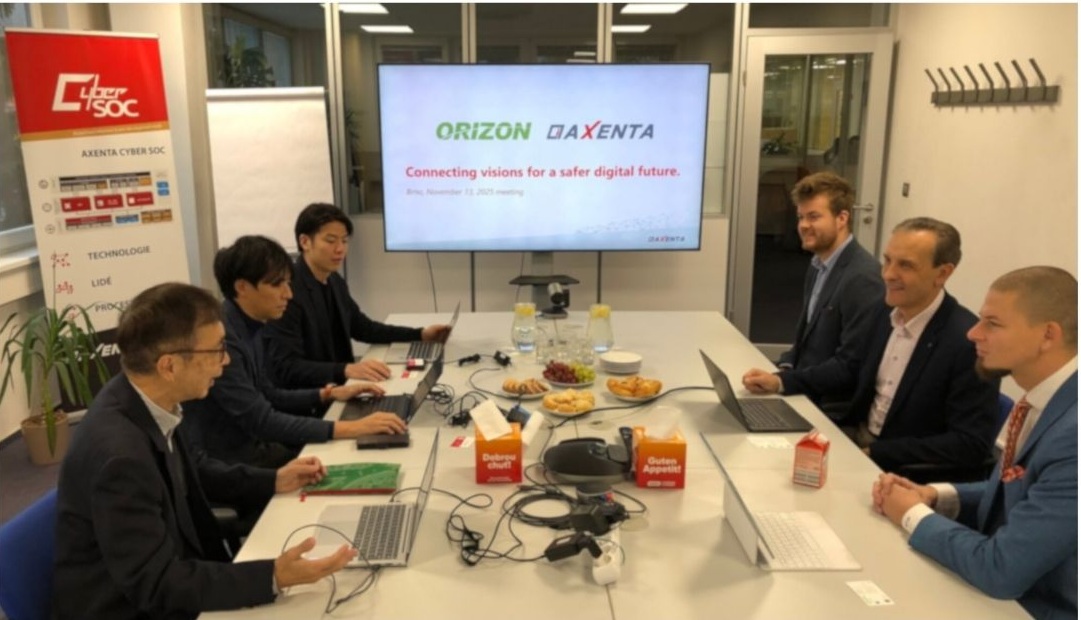
Our visit to AXENTA deepened our understanding of the security operations expertise developed in Central Europe and reaffirmed why ORIZON Systems collaborates with Czech firms.
The Czech Republic is known for active cybersecurity research, and Brno is recognized as Central Europe’s technology hub, with many universities, research institutes, and tech companies. Starting with Masaryk University, where Flowmon originated, the country has an environment that swiftly transforms fundamental research in cryptography, networks, AI, and other areas into practical products. Many companies comply with the EU’s stringent security standards. Among them, AXENTA, which shares Flowmon’s academic roots and offers practical SOC operations aligned with EU regulations, is an ideal partner for collaboration.
The EU’s strict data protection and security laws, including GDPR, require companies to meet specific security standards. The Czech Republic’s new cybersecurity law mandates advanced monitoring systems and log management, leading to strengthened SOC operations and ongoing investment in attack detection and log analysis. The maturity of the legal system and market is enhancing the technical and practical capabilities of IT firms like AXENTA.
By bringing AXENTA’s expertise, developed under strict EU standards, to Japan, ORIZON Systems believes it can elevate the security operations of domestic clients, especially those who:
- Want to reduce the burden of building a SOC
- Aim to strengthen network threat detection
- Seek integrated security management, including for overseas branches
AXENTA is already collaborating with Japanese companies that has branches in the Czech Republic. Combining network visibility focused on Flowmon ADS with AXENTA’s analytical skills enables deeper threat insights and faster, more effective responses.
Conclusion
This visit revealed many lessons Japanese companies can learn from the Czech market, such as a proactive approach to security investment and mature SOC operations. Collaboration with Brno-based tech companies like Flowmon remains a strategic priority for us. As security needs grow in Japan, we are confident that strengthening partnerships with Czech firms will help deliver new value. ORIZON Systems will continue working with domestic and international partners to support more robust security operations.
